Jobs Europe
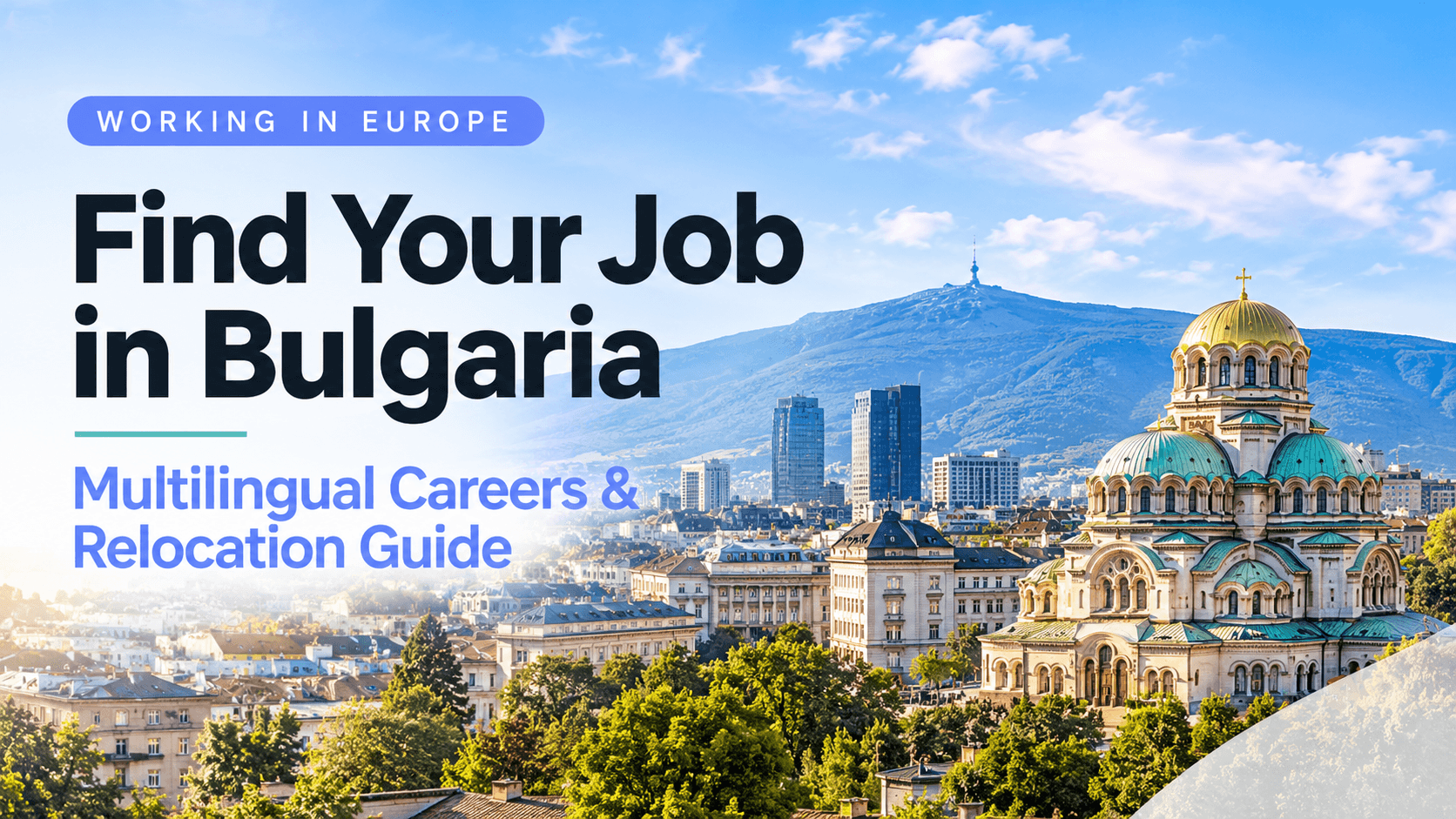
Jobs in Bulgaria for Multilingual Speakers: A Guide to Working and Relocating
Are you considering moving abroad for work? Bulgaria is a destination worth exploring, particularly if you speak more than one language and are interested in working for an international company.
The country has developed an international business services and customer experience sector, creating opportunities for multilingual professionals in customer support, technical assistance, sales, digital services and back-office operations. International employers recruit people who can communicate with customers in languages such as German, Dutch, Spanish, French, Greek and English, making language skills a valuable advantage when searching for jobs in Bulgaria.
For candidates considering relocation, Bulgaria offers opportunities to combine an international working environment with a different lifestyle and the experience of living in a new European country. Sofia is a major destination for international employment, while cities such as Varna and Plovdiv also offer opportunities worth exploring.
Companies including TELUS Digital Bulgaria, Sutherland Bulgaria and Next Job Abroad advertise multilingual opportunities through Jobs Europe. Depending on the vacancy, candidates may also find relocation assistance, training and opportunities to develop their professional skills.
In this guide, we explain what international jobseekers should know about working in Bulgaria, which industries recruit multilingual professionals, what to consider when comparing salaries and living costs, and how to prepare for a move.
If you are ready to explore opportunities, you can already browse jobs in Bulgaria on Jobs Europe.
1. Why Consider Moving to Bulgaria for Work?
Bulgaria has become an interesting destination for international professionals, particularly those interested in multilingual customer experience, business services and technology-related roles.
Several factors make the country worth considering.
Opportunities for Multilingual Professionals
International companies need employees who can communicate with customers and business partners in different markets. As a result, language skills can open doors to roles that may not require extensive previous experience in the industry.
Depending on the employer and position, opportunities may be available for candidates speaking:
German and English.
Dutch and English.
French and English.
Spanish and English.
Italian and English.
Greek and English.
Nordic languages and English.
Other Central and Eastern European languages.
The languages requested depend on the employer's current customer markets and recruitment needs. Some vacancies require advanced proficiency in a specific language, while others also require strong English communication skills.
For candidates who have studied languages, lived abroad or developed communication skills through previous employment, multilingual recruitment can provide an alternative route into an international career.
International Working Environments
Many international employers operate multicultural teams in Bulgaria. Employees may work with colleagues from different countries while supporting customers in international markets.
This environment can help professionals develop communication, problem-solving and intercultural skills. It can also provide experience with international business operations, digital services and customer relationship management.
Bulgaria and the Euro
Bulgaria joined the European Union in 2007 and adopted the euro on 1 January 2026. The euro is now the country's official currency, making salary comparisons and everyday financial planning easier for candidates arriving from other euro-area countries.
For official information, see the European Commission's overview of Bulgaria and the euro.
A Different European Lifestyle
Bulgaria offers a variety of living environments, from the capital's urban lifestyle to coastal cities and historic destinations.
Candidates can explore modern city neighbourhoods, cultural attractions, restaurants, mountain destinations and the Black Sea coastline. The right location will depend on where a job is based and what kind of lifestyle someone prefers.
2. Which Industries Offer Jobs for Foreigners in Bulgaria?
International recruitment in Bulgaria covers several areas, with multilingual customer experience and business services particularly relevant to candidates who speak European languages.
Customer Support and Customer Experience
Customer support is one of the most accessible areas for multilingual jobseekers to investigate.
International companies need employees to assist customers through telephone, email, live chat and other communication channels.
Typical positions include:
Customer Support Representative.
Customer Service Advisor.
Customer Care Specialist.
Client Support Agent.
Delivery Advisor.
Technical Support Specialist.
Depending on the role, responsibilities may include answering customer questions, troubleshooting issues, managing account enquiries and providing product or service information.
Language proficiency is often essential. Some employers also recruit candidates without previous customer service experience if they demonstrate the required language skills, communication ability and willingness to learn.
Technical Support and IT Services
Technical support positions may suit candidates who combine language skills with an interest in technology.
Employees can assist customers with software, digital products, account access, troubleshooting and technical enquiries.
Some roles require previous technical experience, while others provide structured training for candidates who demonstrate strong analytical and communication skills.
Sales and Business Development
Multilingual sales positions can involve communicating with potential customers, managing business enquiries, identifying opportunities and supporting commercial relationships.
Candidates may work with customers in a specific international market and use their native or advanced language skills throughout the sales process.
These positions can be suitable for people with experience in sales, customer service, account management or business communication.
Content Moderation and Digital Trust and Safety
International digital platforms require professionals to review content, identify potential policy violations and help maintain safe online environments.
Roles can include:
Content Moderator.
Digital Trust and Safety Analyst.
Trust and Safety Specialist.
Online Community Support Specialist.
These positions may require strong language comprehension, attention to detail and the ability to follow detailed procedures.
Candidates should always review the job description carefully, including information about the type of content handled, working hours and any specific role requirements.
Back-Office and Business Services
International companies also recruit for administrative and operational positions.
Examples include data processing, document verification, customer administration, finance support and other business services.
These roles may be particularly interesting for candidates who prefer structured tasks and written communication rather than continuous telephone-based customer support.
3. Where Can You Find Multilingual Jobs in Bulgaria?
The city you choose can influence the types of opportunities available, your commute and your everyday lifestyle.
Three locations worth exploring are Sofia, Varna and Plovdiv.
Sofia: Bulgaria's Main International Employment Hub
Sofia is the capital and a major destination for international employment.
The city has an established business services and technology sector, with international employers recruiting for customer experience, technical support, sales, digital services and administrative positions.
For multilingual candidates, Sofia offers opportunities to work with international teams and support customers across different European markets.
Employers such as TELUS Digital Bulgaria and Next Job Abroad advertise opportunities in the city through Jobs Europe.
Explore: Available jobs in Bulgaria on Jobs Europe
Varna: International Opportunities by the Black Sea
Varna is a coastal city on Bulgaria's Black Sea coast. It offers a different lifestyle from the capital, with access to beaches, restaurants, cultural attractions and coastal activities.
The city is also home to international business operations and customer service teams.
Sutherland Bulgaria, for example, has advertised German- and English-speaking customer service opportunities in Varna.
This can make the city particularly interesting for candidates who want to combine an international job with life near the coast.
Plovdiv: Industry, Business and Culture
Plovdiv is one of Bulgaria's major cities and has a diverse economy, including manufacturing, logistics, technology and business services.
Although the range of multilingual vacancies may differ from Sofia, it is worth including Plovdiv in your search if you are flexible about location.
Candidates should check whether individual roles are office-based, hybrid or remote before making relocation plans.
4. International Employers Hiring Multilingual Candidates in Bulgaria
Several employers featured on Jobs Europe provide examples of the types of opportunities available to international candidates.
Vacancies, language requirements and benefits change regularly, so always check the current job description before applying.
TELUS Digital Bulgaria
TELUS Digital Bulgaria advertises opportunities across customer experience, technical support, digital services and other international operations.
Its vacancies on Jobs Europe include positions requiring different language combinations, including German and English, Spanish and English, and Greek and English.
Examples of job titles include:
Technical Support Specialist.
Client Implementation Specialist.
Player Support Specialist.
Digital customer experience roles.
Some vacancies also include relocation assistance. For example, a Spanish-speaking technical support listing on Jobs Europe describes a relocation bonus, temporary accommodation, a flight to Sofia and airport transportation.
Benefits and eligibility depend on the specific vacancy, so candidates should review the full advertisement.
Explore TELUS Digital Bulgaria's employer profile and open positions on Jobs Europe.
Sutherland Bulgaria
Sutherland is an international company operating in customer experience management and business services.
Its Bulgarian operations include teams supporting customers in different languages.
One advertised opportunity on Jobs Europe is a German- and English-speaking customer adviser position in Varna.
The listing specifies German at C1 level and English at B2 level. It also describes an advertised starting salary of €1,800 per month, a welcome bonus, paid training and additional benefits.
The position involves customer communication through telephone, email and live chat. It also includes rotating shifts, so applicants should consider the working schedule before applying.
This is a useful example of how advanced language skills can open opportunities outside the candidate's home country.
See the German- and English-speaking Sutherland opportunity in Varna.
You can also explore Sutherland Bulgaria's official careers website.
Next Job Abroad
Next Job Abroad is an international recruitment company focused on helping candidates find employment opportunities abroad.
Its Jobs Europe profile features opportunities in Sofia, including Dutch-speaking positions such as:
Delivery Advisor.
Customer Service Agent.
Solution Consultant.
Content Moderator.
Digital Trust and Safety Analyst.
The company also describes support with applications, interview preparation and relocation.
This can be particularly useful for candidates who are considering moving abroad for the first time and would appreciate guidance during the recruitment process.
Explore Next Job Abroad's company profile and available positions.
Find More International Employers
These companies are examples rather than an exhaustive list. Other employers may advertise multilingual opportunities in Bulgaria as their recruitment needs change.
Use the Jobs Europe job search to explore current vacancies by location, language, company and job category.
5. What Languages Are in Demand for Jobs in Bulgaria?
Language requirements depend on the employer, industry and customer market.
However, international companies often recruit candidates who can support customers in their preferred language while communicating effectively in English.
German
German-speaking candidates can explore customer service, technical support, sales and business services positions.
Some vacancies require C1 German and B2 English, while others may specify different proficiency levels.
Dutch
Dutch-speaking candidates can investigate customer support, delivery advice, solution consulting and digital services positions.
Some employers recruit Dutch speakers for international teams in Sofia and may offer relocation support.
French and Spanish
French- and Spanish-speaking candidates can explore opportunities in customer experience, technical support, digital services and sales.
The exact requirements vary according to the position and the employer's customer base.
Greek and Other European Languages
Greek, Italian, Nordic and Central and Eastern European languages can also be relevant to international recruitment.
In some cases, a less commonly requested language can help candidates stand out when employers are recruiting for a specific customer market.
Do You Need to Speak Bulgarian?
Not necessarily.
Some international positions use English and another required language as the main working languages. In these cases, Bulgarian may not be a requirement.
However, learning basic Bulgarian can make everyday life easier. It can help with shopping, appointments, public services and communication outside the workplace.
Always check the language requirements in the individual job advertisement rather than assuming that every international role has the same expectations.
6. Salaries and Benefits: What Can You Expect?
Salary is an important consideration when deciding whether to relocate.
However, there is no single salary that applies to all multilingual jobs in Bulgaria. Earnings depend on the language required, professional experience, responsibilities, working hours, employer and industry.
Bulgaria's Minimum Wage
From 1 January 2026, Bulgaria's national minimum monthly wage is €620.20 gross for a full working month. The minimum hourly rate is €3.74.
These figures represent the statutory minimum, not the typical salary for multilingual customer support or specialist positions.
You can check the latest information through the Bulgarian government's official minimum wage information and Eurostat's minimum wage statistics.
What Influences Your Salary?
When comparing vacancies, consider:
The language combination required.
Your level of professional experience.
Whether the role involves customer service, technical support or sales.
Whether the position includes night, weekend or holiday shifts.
Performance-related bonuses and incentives.
Additional benefits such as health insurance and meal vouchers.
Whether relocation assistance is included.
A position requiring advanced German, Dutch or another specialised language may have different compensation from a general English-speaking role.
Understand Gross and Net Salary
Always check whether the advertised salary is gross or net.
Gross salary is the amount before applicable taxes and social security deductions. Net salary is the amount you receive after deductions.
Ask the employer to clarify:
Monthly gross salary.
Estimated monthly net salary.
Bonus structure and payment conditions.
Shift allowances.
Additional benefits.
Whether relocation support is paid separately or included in the compensation package.
This will help you compare offers accurately and estimate your actual monthly budget.
7. Cost of Living in Bulgaria: What Should You Budget For?
One of the main considerations when moving abroad is whether your expected salary will comfortably cover your everyday expenses.
Bulgaria has different living costs depending on the city, neighbourhood and lifestyle. Sofia generally requires a different housing budget from smaller cities, while accommodation close to business districts or public transport may cost more than properties further away.
Before accepting a job, research the following expenses.
Rent and Accommodation
Housing will usually be one of your most important monthly expenses.
Consider whether you want to rent a private apartment, share accommodation or initially stay in temporary housing.
Before signing a rental agreement:
Check the location and transport connections.
Confirm whether utilities are included.
Ask about the security deposit.
Check the rental contract and notice period.
Confirm whether the property is furnished.
Understand who is responsible for maintenance.
The EURES guide to living and working conditions in Bulgaria provides additional information about accommodation and practical arrangements.
Food and Groceries
Your grocery budget will depend on whether you cook at home, eat out regularly or use workplace meal benefits.
Explore local supermarkets, markets and neighbourhood shops before deciding on a monthly budget.
Transport
Sofia and other major cities have public transport networks, but commuting times depend on where you live and where you work.
Check whether your employer provides transport assistance or whether your workplace is accessible by public transport.
If you work shifts, particularly late at night or early in the morning, check your transport options outside normal commuting hours.
Utilities and Other Expenses
Remember to budget for electricity, water, heating, internet, mobile services and everyday household expenses.
Seasonal heating and cooling requirements can also influence your monthly costs.
Build a Relocation Budget Before Accepting an Offer
A useful approach is to calculate your expected monthly net salary and compare it with your estimated expenses.
Include your initial costs as well as recurring expenses. These may include flights, temporary accommodation, rental deposits, transport, documents and household essentials.
A relocation package can help reduce the initial financial pressure, but check exactly what it covers and whether any conditions apply.
8. Working in Bulgaria as an EU or Non-EU Citizen
Your right to work in Bulgaria depends partly on your nationality and immigration status.
Understanding the requirements before relocating is essential.
EU, EEA and Swiss Citizens
Citizens of EU countries, as well as citizens of Iceland, Liechtenstein, Norway and Switzerland under the relevant free-movement arrangements, generally do not need a work permit to take employment in Bulgaria.
However, residence registration requirements may apply if you stay for more than three months.
You should check the necessary documentation and registration procedures with the Bulgarian authorities before moving.
The Bulgarian Ministry of Interior's guidance for EU citizens provides information about longer-term residence.
Non-EU Citizens
Non-EU nationals generally need an appropriate work and residence authorisation before starting employment in Bulgaria.
Depending on the circumstances, this may involve a single permit, a relevant visa and residence documentation.
The process can depend on the employer, job, nationality and immigration route.
Official guidance is available through the European Commission's EU Immigration Portal – Employed Worker in Bulgaria.
Do not assume that receiving a job offer automatically gives you permission to work. Confirm the requirements with the employer and the relevant authorities before making relocation arrangements.
9. How to Find a Job in Bulgaria Before Moving
For many international candidates, applying from their current country is the most practical way to begin.
You can research employers, attend interviews online and discuss relocation arrangements before committing to a move.
Step 1: Identify Your Strongest Language Skills
Start by identifying the languages you speak and your proficiency level.
Be specific. For example:
German – C1.
English – B2.
Dutch – Native.
Spanish – B2.
Employers may use different proficiency frameworks, so make sure your CV accurately reflects your abilities.
Step 2: Prepare Your CV for International Employers
Your CV should make it easy for recruiters to identify your language skills, experience and relevant qualifications.
Include:
Your language proficiency.
Customer service or sales experience.
Communication and problem-solving skills.
Technical knowledge where relevant.
Previous international experience.
Availability and relocation flexibility.
You can also use Europass to create a European CV, which provides a structured way to present your professional experience and qualifications.
Step 3: Search for Jobs by Language and Location
Instead of searching only for general jobs in Bulgaria, use more specific searches.
For example:
German-speaking jobs in Sofia.
Dutch-speaking jobs in Bulgaria.
English-speaking customer support jobs.
Spanish-speaking technical support positions.
Multilingual jobs in Varna.
Customer service jobs with relocation assistance.
On Jobs Europe, you can browse vacancies and narrow your search according to the available job information.
Start with Jobs Europe vacancies.
Step 4: Research Employers
Before applying, learn about the company and the position.
Read the job description carefully and check:
What languages are required?
Is previous experience necessary?
Is the role office-based, hybrid or remote?
What are the working hours?
Is training provided?
Is relocation assistance available?
What salary and benefits are included?
You can also explore company profiles on Jobs Europe to learn more about employers and their available opportunities.
Step 5: Prepare for Online Interviews
Many international employers conduct interviews remotely, particularly when candidates are applying from abroad.
Prepare to discuss your language skills, customer communication experience, availability and motivation for moving to Bulgaria.
It is also sensible to ask practical questions about relocation, accommodation, start dates and documentation.
Step 6: Compare Offers Before Relocating
Do not make a decision based only on the advertised salary.
Consider the full package, including net income, accommodation costs, relocation support, working hours, benefits and career development opportunities.
A well-informed decision can make the transition much easier.
10. Relocation Checklist: Preparing to Move to Bulgaria
Once you receive an offer, it is time to organise the practical details.
The following checklist can help you prepare.
Before You Leave
Confirm your employment contract and start date.
Check your right to work and residence requirements.
Confirm whether your employer provides relocation assistance.
Arrange temporary accommodation if necessary.
Research rental prices and neighbourhoods.
Check what documents you need to bring.
Organise travel and initial living expenses.
Ask the employer about onboarding and arrival arrangements.
After Arriving
Complete any applicable residence registration procedures.
Arrange long-term accommodation.
Understand your employment and social security arrangements.
Ask about healthcare registration and insurance.
Arrange banking and everyday payment methods.
Obtain a local SIM card or mobile plan.
Familiarise yourself with public transport.
Learn basic Bulgarian expressions.
Ask About Relocation Support
Some employers provide practical assistance to candidates moving to Bulgaria.
Depending on the vacancy, this could include:
Relocation bonuses.
Flight reimbursement.
Temporary accommodation.
Airport transfers.
Help finding permanent accommodation.
Assistance with administrative procedures.
These benefits are not standard across all employers. Confirm the details, eligibility conditions and payment arrangements before accepting an offer.
11. What Is It Like to Build a Career in Bulgaria?
Moving abroad is not only about finding a job. It is also about building a life in a new environment.
For multilingual professionals, working in Bulgaria can provide an opportunity to develop international experience, improve communication skills and learn how multinational organisations operate.
Developing Your Professional Skills
Customer experience and business services roles can help employees develop transferable skills such as:
Customer relationship management.
Professional communication.
Problem-solving.
Digital platform knowledge.
Time management.
Working in international teams.
Sales and service delivery.
Depending on the employer, employees may also have access to internal training, mentoring and opportunities to apply for more specialised or senior positions.
Building an International Network
Working with colleagues from different backgrounds can help you build professional relationships and develop a broader understanding of international business.
This can be particularly valuable if you want to continue your career in another European country in the future.
Learning the Local Language
Even when Bulgarian is not required for your job, learning the basics can make your experience more rewarding.
It can help you communicate with local residents, navigate everyday situations and feel more settled in your new home.
12. Common Mistakes to Avoid When Moving to Bulgaria for Work
Relocating for employment can be exciting, but a little preparation can prevent unnecessary problems.
Accepting an Offer Without Understanding the Salary
Always clarify whether the salary is gross or net and whether bonuses are guaranteed or performance-related.
Calculate your expected take-home pay before making financial commitments.
Assuming Every Job Includes Relocation Assistance
Some vacancies include flights, accommodation or relocation bonuses, while others do not.
Read the job description and ask the employer to confirm the details in writing.
Underestimating Housing Costs
Do not rely on general statements that Bulgaria is inexpensive.
Research current rental listings in the specific city and neighbourhood where you expect to work.
Ignoring Working Hours
Some customer support positions operate with rotating shifts, including evenings, weekends and public holidays.
Check the schedule and any additional compensation before accepting the position.
Moving Before Confirming Your Employment and Documentation
If you require immigration authorisation, make sure the necessary process is understood before travelling to start work.
Even if you are an EU citizen, you should prepare the documents needed for longer-term residence and employment administration.
Applying Without Checking Language Requirements
A vacancy may require C1 German, B2 English or another specific combination.
Be honest about your proficiency and apply for roles that match your actual skills.
Frequently Asked Questions About Jobs and Relocation in Bulgaria
Are there jobs in Bulgaria for foreigners?
Yes. International employers recruit foreign candidates for customer support, technical assistance, sales, digital services and business operations.
Multilingual candidates may find opportunities where employers need employees to communicate with customers in different European languages.
Can I find English-speaking jobs in Bulgaria?
Yes. English is used in many international workplaces. However, some customer-facing positions require another language in addition to English.
Check the language requirements in each vacancy.
Which languages are useful for finding a job in Bulgaria?
German, Dutch, French, Spanish, Greek, Italian and Nordic languages can be relevant to international recruitment, depending on current employer requirements.
Strong English skills are also commonly requested.
Which companies hire multilingual candidates in Bulgaria?
Employers featured on Jobs Europe include TELUS Digital Bulgaria, Sutherland Bulgaria and Next Job Abroad.
Their vacancies can include customer service, technical support, sales, content moderation and other international roles. Available positions and language requirements change over time.
Do employers in Bulgaria offer relocation packages?
Some employers offer relocation assistance, which may include flights, temporary accommodation, relocation bonuses or help finding housing.
The benefits depend on the individual vacancy. Always confirm what is included before accepting an offer.
Do I need to speak Bulgarian to work in Bulgaria?
Not always. Some international positions use English and another required language as their main working languages.
However, basic Bulgarian is useful for everyday communication and settling into the country.
Can EU citizens work in Bulgaria without a work permit?
Generally, yes. EU citizens have the right to work in Bulgaria without obtaining a work permit, subject to applicable rules and exceptions.
Longer stays may require residence registration. Check the official Bulgarian authorities' guidance before moving.
Can non-EU citizens work in Bulgaria?
Yes, but non-EU nationals generally need the appropriate work and residence authorisation. Requirements depend on the individual circumstances and employment route.
The European Commission's immigration guidance for Bulgaria explains the main procedures.
Is Bulgaria a good place to start an international career?
Bulgaria can be worth considering for candidates interested in multilingual customer experience, business services, technical support and other international roles.
The right opportunity depends on your language skills, professional interests, salary expectations and preferred location.
How can I find multilingual jobs in Bulgaria?
You can search for vacancies by language, location and job category on Jobs Europe.
Explore available jobs in Bulgaria and review employer profiles to discover opportunities that match your skills.
Start Your International Career in Bulgaria with Jobs Europe
Moving to another country for work is a major decision, but it can also be an opportunity to develop professionally, experience a new culture and build an international career.
Bulgaria offers opportunities for multilingual professionals across customer experience, technical support, sales, digital services and business operations. Employers such as TELUS Digital Bulgaria, Sutherland Bulgaria and Next Job Abroad demonstrate the range of international recruitment activity taking place in the country.
Whether you speak German, Dutch, French, Spanish, Greek, English or another European language, the right vacancy could help you take the next step.
Jobs Europe makes it easier to explore international vacancies, discover employers and identify opportunities across different European markets.
Ready to take the next step?
Browse multilingual jobs in Bulgaria on Jobs Europe, explore international employers, or create your candidate profile to start exploring your next opportunity.
Created 28 Nov 2026
Updated 28 Nov 2026